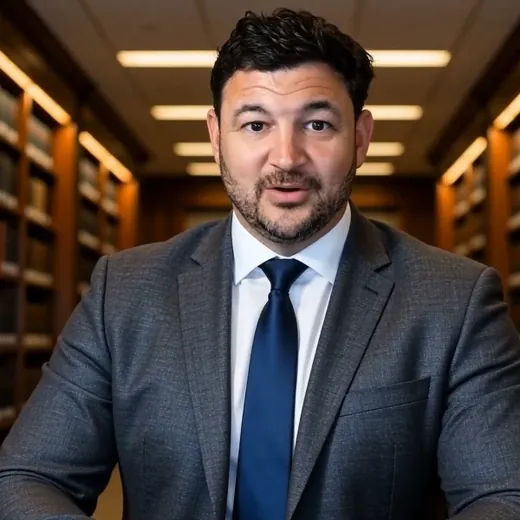




The Business Navigators compass logo Founded by Luke MedvegyLt Col (Ret.) · U.S. Army

    The Business Navigators · Veteran-owned AI and operations firm

    Agentic AI · Operations · Fractional leadershipMaking the impossible, possible.

    Where strategy, operations and execution collide, we make AI work.

    For supply chain · manufacturing · aerospace and defense · energy · consulting firms

    The Business Navigators builds the CRMs, project systems, automations and AI agents that help manufacturers and consulting firms make money faster. Founded and led by Luke Medvegy, a retired Army Lieutenant Colonel with 23 years of leading teams, moving supplies across continents and keeping budgets in balance.

    The quickest way to work with us is a 15-minute conversation. No pitch deck, just your problem and a plan.

    Veteran-owned · Based in Indiana · Working with teams across the U.S. · Meet our founder ↗

    A message from our CEO · Luke Medvegy, Lt Col (Ret.)See all products & services →
    Leadership
    23 yrs
    U.S. Army officer, retired LTC
    Budget led
    $1B
    Billion-dollar logistics initiative
    Delivered
    365+
    Projects across 19 countries
    Built
    13
    Brands and platforms launched

    Our agent

    Chat with a Navigator

    Not sure where to start? Tell our agent what you are wrestling with. It will work out the right next step: a free intro call, a paid working session on one problem, or a deeper executive session.

    Two or three replies, then it hands you to our team. Prefer a person? Message a Business Navigator directly from the chat.

    Nav · The Business Navigators
    Figures out what to build with you
    LIVE

    Who is this for?

    Your answers stay in this conversation unless you choose to message a Business Navigator.

    Who we help · where money shows up first

    Three doors. Each one opens onto something you can measure.

    We start where the profit leaks are biggest and the fix is fastest, then build out from there.

    Workers at a production line inspecting finished goods

    Manufacturing facilities

    Less downtime, faster quotes, cleaner shift handoffs.

    • Downtime and scrap tracking your crew will actually use
    • Preventive maintenance schedules with automatic reminders
    • Same-day quotes pulled from your real costs
    • Digital shift handoffs and quality checklists with photos
    • An AI assistant that answers from your own SOPs
    Consulting team reviewing a presentation around a conference table

    Consulting firms, small to large

    One system from first call to final invoice.

    • A CRM that tracks every lead, proposal and renewal
    • Project management tied to time, budget and margin
    • Utilization and capacity dashboards leaders trust
    • Proposals, kickoffs and status reports that write themselves
    • Client portals that cut the "where are we?" emails
    Two business leaders shaking hands in an office

    Owners and executive teams

    A fractional COO who builds as well as advises.

    • Operating rhythm: meetings, scorecards, owners
    • Custom command center for your whole business
    • AI agents for follow-up, reporting and research
    • Executive coaching for leaders in transition
    • Brand and visibility work for companies growing or preparing to sell

    The part others call hard

    Advanced CRMs, project software and automations are routine work here.

    Most firms quote months for this. We build it around how your team already works, connect it to the tools you already pay for, and train your people to run it. You get a working system in weeks, not a slide deck.

    Custom CRMsSales pipelinesProject management softwareClient portalsMulti-step automationsAgentic AI and AI agentsKPI dashboardsQuoting toolsMaintenance schedulersOnboarding flowsEmail and SMS follow-upKnowledge assistants from your SOPsExecutive command centersSEO, AEO and GEO visibility

    The usual order of work

    Fast wins first, so the project pays for itself while the bigger pieces come together.

    Week 1

    Stop losing leads

    Every inquiry captured, answered in minutes and tracked in one CRM.

    Weeks 2–3

    Quote and propose faster

    Quotes and proposals drafted from your real numbers, ready for review.

    Weeks 3–6

    See the whole board

    Projects, capacity and margin on one dashboard your team updates without thinking.

    Days 30–90

    Put AI to work

    Agents for reporting, follow-up, training and research, with people approving what matters.

    Timelines depend on your current systems and data. We set them together on the first call.

    18 problems we solve

    Strategy, operations and execution: where companies get stuck.

    These are the problems leaders describe to us most, in their words. Each one has a fix and a number we use to prove it worked.

    Where it starts

    Strategy

    The plan is unclear, unowned or unmeasured.

    1. “We have AI pilots everywhere and nothing in production.”Rank every pilot by value and effort, then scale the few that pay and stop the rest.Measured by: Pilots moved to production
    2. “No one owns AI here.”Name one accountable leader, a small governance group and a clear operating model.Measured by: Decisions closed on time
    3. “We can't tie AI spending to results.”Write a value case for each use case and track it on one scorecard.Measured by: Return on AI spend
    4. “The board keeps asking for our AI plan.”A 12-month roadmap with budget, risks and milestones, in board language.Measured by: Roadmap milestones hit
    5. “We don't know what to build and what to buy.”Vendor reviews and build-versus-buy calls based on cost, risk and speed.Measured by: Cost per use case
    6. “AI risk and compliance keep us up at night.”An AI use policy, data rules and approval paths before tools spread.Measured by: Policy coverage and incidents

    Where it breaks

    Operations

    The work runs on disconnected tools and manual effort.

    1. “Our data lives in a dozen tools that don't talk.”One connected system of record for customers, projects and money.Measured by: Hours spent re-entering data
    2. “Leads and quotes fall through the cracks.”Every inquiry captured and answered fast, with quotes drafted from real costs.Measured by: Speed to lead and quote turnaround
    3. “Projects run late and over budget, and we find out too late.”Project management tied to time, budget and margin, with early warnings.Measured by: On-time and on-budget delivery
    4. “Downtime, scrap and rework eat our margin.”Plant-floor tracking by reason code and maintenance before breakdowns.Measured by: Unplanned downtime and scrap rate
    5. “We can't hire fast enough to keep up.”Automations and AI assistants that take repetitive work off your people.Measured by: Revenue per employee
    6. “Reporting takes days of manual work.”Dashboards that update themselves from the systems you already use.Measured by: Hours to produce reports

    Where it sticks or slips

    Execution

    Good plans stall when people, rhythm and follow-through are missing.

    1. “People don't use the tools we paid for.”Hands-on training, simple workflows and champions in every team.Measured by: Weekly active use
    2. “Every department runs its own playbook.”One operating rhythm: shared scorecard, meeting cadence and owners.Measured by: Cross-team handoff time
    3. “Change efforts stall after the kickoff.”A battle rhythm of weekly status, clear owners and visible progress.Measured by: Milestones hit on schedule
    4. “Our leaders are stuck in meetings instead of making decisions.”A command center that puts the numbers and the next decision in one place.Measured by: Meeting hours per decision
    5. “Know-how walks out the door when people leave.”AI assistants that answer from your own procedures and past work.Measured by: Time for new hires to be productive
    6. “We can't say what success looks like in 90 days.”A written 90-day plan with three to five KPIs and a named owner for each.Measured by: 90-day KPIs met

    Problems solved, measured

    KPIs that connect, so every system answers to a number.

    Manufacturing

    Overall equipment effectiveness (OEE)
    How much of planned time you actually produce good parts.
    Unplanned downtime hours
    Logged by reason, so the top three causes get fixed first.
    Scrap and rework rate
    Tied to the shift, machine and material behind it.
    Quote turnaround time
    From request to sent, the number that wins orders.
    On-time delivery
    What your customers remember.

    Consulting firms

    Billable utilization
    By person and practice, every week instead of every quarter.
    Realization and project margin
    What you billed against what the work really cost.
    Proposal win rate
    Which offers, sizes and sources close.
    Pipeline coverage
    Enough qualified work to keep the bench busy next quarter.
    Days sales outstanding
    How fast invoices turn into cash.

    Leadership and growth

    Speed to lead
    Minutes from inquiry to first real reply.
    Revenue per employee
    The cleanest read on whether systems are working.
    Hours saved per week
    Measured before and after each automation.
    Employee retention
    People stay where work is clear and tools help.
    Decisions closed on time
    The rhythm that keeps a leadership team moving.

    Led by twenty-plus years of proof

    Leading teams. Balancing budgets. Delivering the impossible.

    Our founder, Luke Medvegy, learned in the Army that a big goal is just a long list of supply lines, deadlines and owners. He ran that playbook on a billion-dollar logistics program, hundreds of international projects and a portfolio of companies. The Business Navigators now runs it for yours.

    Service
    Retired U.S. Army Lieutenant Colonel23 years leading soldiers, logisticians and multinational teams
    Scale
    Led a $1B logistics initiativePlanning, contracts, budgets and people across two governments
    Reach
    365+ projects across 19 countries in EuropeSupporting more than 4,000 troops
    Education
    MBA, Indiana University Kelley School of BusinessM.A. in Diplomacy, Norwich University
    Credentials
    Demonstrated Master LogisticianLean Six Sigma Green Belt · PMP trained
    Recognition
    2025 Indiana Vetrepreneur of the YearIVMF Ambassador and mentor · Four Block coach
    Service now
    Board Chair, American Heroes Equine ConnectionAdvisor to several veteran-focused nonprofits
    Author
    Harnessing AI for Business SuccessA Guide for US Military Veteran Entrepreneurs

    Testimonials

    Trusted by Industry Leaders

    “The Navigator's Circle transformed how we operate. Our team productivity increased by 6X within the first quarter.”

    Executive Leader

    Fortune 500 Company

    “Finally, one platform that does it all. The integration of AI and automation tools is a game-changer for scaling.”

    Business Owner

    Tech Startup Founder

    “The level of sophistication and polish in these tools rivals enterprise solutions at a fraction of the complexity.”

    Operations Director

    Private Equity Firm

    The traits behind the work

    What CEOs hire for that AI cannot do.

    AI can draft, sort and summarize. It cannot earn trust or own a decision. These are the master-class traits we bring to every engagement, and the same ones we look for in Founders & Ventures Alliance members.

    01 · TRUSTKeeps the promise

    Says what will happen, then makes it happen. Tells you early when it won't.

    02 · LEADERSHIPPeople follow

    Gets a team to move together when the plan changes, without a title doing the work.

    03 · JUDGMENTDecides with gaps

    Makes the call with 70% of the facts and owns the outcome.

    04 · LOGISTICSSees the whole chain

    Knows the next three things that break if one thing slips.

    05 · COMPLEX PROBLEMSUntangles the mess

    Breaks a problem with no clean data into steps a team can run.

    06 · ACCOUNTABILITYOwns the number

    Every system ties to a KPI and a name. No orphan projects.

    07 · CALMSteady under fire

    Lowers the temperature in a crisis so people can think.

    08 · BUILDERFounder grit

    Ships the first version, learns, and ships the next. Thirteen brands and counting.

    The Business Navigators family

    We don't just advise. We build and run companies.

    Consulting, media, software, coaching communities and nonprofits. Each one runs on the same kind of systems we build for clients.

    Insights

    Field notes for leaders who need things to work.

    Tap a card to read it here.

    Diagram: The Business Navigators. People lead; AI agents do the repeatable work.

    AI and careers

    AI won't take your job. Someone who learns it will.

    By · 5 min read

    Most people are still using AI like a search box. In Pew Research Center's survey of U.S. workers, 63% said they don't use AI much or at all in their jobs, and only about 1 in 10 use AI chatbots daily or a few times a week. A large study of ChatGPT use found that practical guidance, looking up information and writing make up nearly 80% of conversations.

    Meanwhile, the fear has been aimed at the wrong target. Economist Richard Baldwin put it plainly at the World Economic Forum's Growth Summit in 2023: AI won't take your job; a person using AI will.

    Continue reading

    AI has moved from answers to work: agentic AI

    Two years ago, AI answered questions. Today agentic AI can draft the proposal, update the CRM, reconcile the invoices and flag the late shipment. It works through a task step by step as an agent, with a person approving the result. Typing a keyword and reading the answer uses a small fraction of what it can do.

    The new org chart

    In teams that have made the shift, each person leads a small crew of AI agents. The scheduler, the follow-up writer, the report builder. The person's job moves from doing every step to designing the work, checking it and owning the result. That is a leadership skill, and it can be learned.

    How to pivot

    1. Stop searching, start delegating. Give AI a whole task with context and an example, not a keyword.
    2. Pick one task you dread. Hand AI the first draft of it every week for 30 days.
    3. Write your process down. AI can only follow steps that exist on paper.
    4. Learn to check the work. Facts, numbers and judgment calls stay with you.
    5. Build one agent. A repeatable workflow for follow-up, reporting or research.
    6. Measure the hours you save. Then show your team the number.
    7. Teach someone else. It's the fastest way to become the person your team turns to for AI.

    For leaders

    Tools are the easy part. IBM's 2026 CEO study found that 83% of CEOs say AI success depends more on people adopting it than on the technology, yet only about a quarter of the workforce uses AI regularly. Train your people first, redraw the org chart around people leading agents, and measure the result.

    Sources: Pew Research Center, U.S. workers and AI (Feb. 2025); Chatterji et al., How People Use ChatGPT, NBER Working Paper 34255 (Sept. 2025); Yahoo News on Richard Baldwin's 2023 remark; IBM Institute for Business Value CEO study, as reported by People Matters (May 2026).

    Two professionals shaking hands across a desk
    Photo: Cytonn Photography on Unsplash

    Leadership

    What CEOs hire for that AI can't do

    By · 6 min read

    AI can write the memo, run the numbers and summarize the meeting. It cannot earn a room's trust, make a hard call with missing facts, or get a tired team to give one more push. Those are the skills CEOs fight hardest to hire, and the data shows they are getting more valuable, not less.

    In the World Economic Forum's Future of Jobs Report 2025, analytical thinking is the top core skill employers name, with about seven in ten companies calling it essential. Leadership and social influence posted the biggest jump of any core skill since 2023, up 22 percentage points. Resilience, flexibility and agility rose 17 points. The same report found that 69% of the skills it assessed have low or very low potential to be replaced by generative AI.

    Continue reading

    1. Trust

    Trust is built one kept promise at a time. Leaders who say what will happen and then make it happen, and who warn early when it won't, get the benefit of the doubt when things get hard. No model can borrow that history.

    2. Judgment with incomplete information

    Real decisions rarely come with clean data. AI can lay out options. A leader has to choose, explain why, and own the result.

    3. Leadership and influence

    Getting a team to change direction mid-course is a human job. It takes credibility, timing and knowing what each person needs to hear.

    4. Solving messy, cross-team problems

    The hardest problems sit between departments: sales promised it, operations can't build it, finance can't fund it. Untangling that takes someone who can see the whole chain and talk to every link.

    5. Accountability

    Strong operators tie every project to a number and a name. When the number moves the wrong way, they say so first.

    6. Calm in a crisis

    Resilience shows up when the plan breaks. The leader's job is to lower the temperature so people can think clearly.

    7. Building and growing people

    Teams that stay and improve are built by leaders who coach. That is still the best return on any hire.

    How to spot these traits in an interview

    • Ask for a time they missed a target and what they told their team.
    • Ask how they made a decision when key facts were missing.
    • Ask who they developed and where that person is now.
    • Ask what they changed their mind about in the last year.

    Where AI fits

    Use AI to speed up the research, drafting and reporting. Then hire, and develop, leaders for the parts that need a person: trust, judgment and the will to see it through.

    Source: World Economic Forum, The Future of Jobs Report 2025, Skills outlook.

    Technician in safety glasses assembling electronics on a factory line
    Photo: Alireza Hatami on Unsplash

    Manufacturing

    Where AI and automation pay back first on the plant floor

    By · 5 min read

    Manufacturers can't hire their way out of the labor gap. A September 2025 study from The Manufacturing Institute and Deloitte projects the U.S. could need up to 3.8 million manufacturing workers by 2033, and more than 1.9 million of those jobs could go unfilled. Sixty-five percent of manufacturers named attracting and keeping talent as their primary business challenge.

    When every hour of every person counts, the fastest payback comes from small systems that remove waste people already complain about.

    Continue reading

    1. A downtime log people actually use

    A tablet at the machine, a short list of reason codes and a daily summary to the supervisor. Within weeks you know which three causes eat most of your hours.

    2. Maintenance before the breakdown

    Schedules based on hours run and past failures, with reminders that go to the right tech. Planned work is cheaper than emergency work.

    3. Same-day quotes

    Pull material, labor and machine costs from the spreadsheet or ERP you already have, and draft the quote automatically for a person to check and send. Faster quotes win more orders.

    4. Shift handoffs that don't get lost

    Digital handoff notes, searchable by machine and date, so the night shift doesn't repeat the day shift's problems.

    5. Quality checks with photos

    Checklists on a phone, photos attached, and an alert when a result is out of spec.

    6. Training from your own SOPs

    Short how-to videos and an AI assistant that answers questions using your procedures, so new hires get productive sooner.

    The KPIs to watch

    • Overall equipment effectiveness (OEE)
    • Unplanned downtime hours by reason
    • Scrap and rework rate
    • Quote turnaround time
    • On-time delivery and first-pass yield

    Start with one line, one KPI and 30 days. Prove it, then roll it across the plant.

    Source: The Manufacturer, reporting on The Manufacturing Institute and Deloitte workforce study (Sept. 2025).

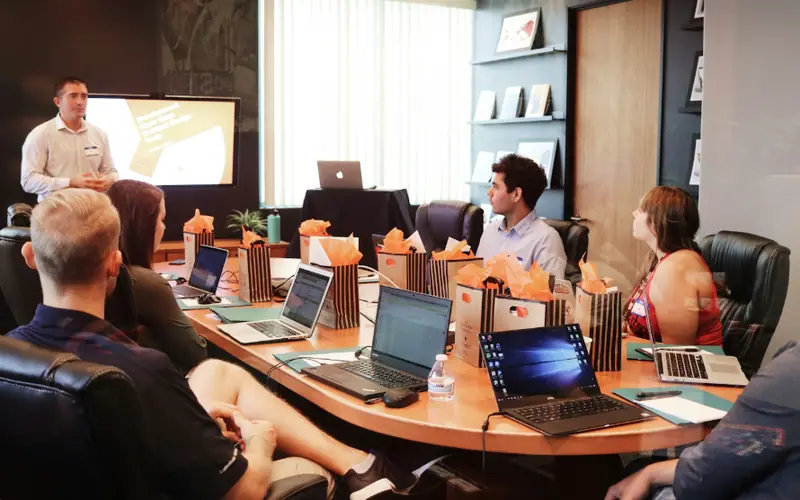
    Consultants with laptops listening to a presenter in a conference room
    Photo: Campaign Creators on Unsplash

    Consulting firms

    One system for clients, projects and profit

    By · 5 min read

    Consulting firms sell time and expertise, yet many can't see their margin until the month is over. SPI Research's 2025 Professional Services Maturity Benchmark, as summarized by Beancount, puts average billable utilization at 66.4%, the lowest in the study's 19-year history, and finds that 59% of services leaders struggle to forecast resource needs.

    The usual cause is tool sprawl: leads in one app, proposals in another, projects in a third, time and invoices somewhere else. Nobody has the full picture.

    Continue reading

    Connect the whole flow

    Lead, proposal, signed scope, project, time, invoice, payment. When those steps share one record, utilization and margin stop being a monthly surprise.

    Dashboards partners will actually open

    • Billable utilization by person and practice
    • Realization and project margin
    • Pipeline coverage for next quarter
    • Proposal win rate by offer and source
    • Days sales outstanding

    Automations that give hours back

    First-draft proposals from your past wins, kickoff checklists that run themselves, weekly client status reports built from project data, and client portals that answer the "where are we?" question before it's asked.

    AI agents with a person in charge

    Meeting notes turned into tasks, research briefs before a pitch, and first drafts of deliverables, all reviewed by the consultant who owns the client.

    It scales both ways

    A three-person boutique and a 300-person firm need the same logic at different sizes. Start with the biggest leak, usually pipeline or time capture, and build from there.

    Source: Beancount, summarizing SPI Research's 2025 Professional Services Maturity Benchmark.

    Forklift moving pallets between tall racks in a distribution warehouse
    Photo: Bernd Dittrich on Unsplash

    Complex problems

    How a logistics mindset turns an impossible project into a plan

    By · 4 min read

    Military logisticians don't call a mission impossible. They break it into supply lines, checkpoints and owners until it becomes a schedule. Luke Medvegy, founder of The Business Navigators, used that approach on a $1 billion logistics initiative and across 365+ projects in 19 European countries.

    The same playbook works for a plant expansion, a CRM rollout or a firm merger.

    Continue reading
    1. Define the end state and the date. What does done look like, and when?
    2. Work backward. Find the critical path: the tasks that move the finish date if they slip.
    3. Name the real constraint. People, money, time or materials. Plan around the tightest one.
    4. One owner per line. Every workstream gets a single name, not a committee.
    5. Set a battle rhythm. Short daily check-ins and a weekly status with the same format every time.
    6. Build the dashboard first. If you can't see progress, you can't steer it.
    7. Plan for friction. Write a Plan B for the top three risks before they happen.
    8. Run an after-action review. What was supposed to happen, what did, why, and what we keep.

    Most "impossible" projects fail on steps 3, 4 and 6. Fix those and the rest gets much easier.

    Book time with The Business Navigators

    Pick the conversation you need.

    15 minutes

    Introductory call

    Free

    Tell us what's stuck. Leave with a clear next step, even if it isn't us.

    Book the free call

    30 minutes

    Single-issue working session

    $1,500

    One problem, worked live: a CRM design, a process map, an automation plan or a KPI set.

    Book 30 minutes

    60 minutes

    Executive working session

    $2,500

    For owners and leadership teams: operating plan, systems roadmap and priorities.

    Book 60 minutes

    Questions

    Straight answers

    Proof in print

    Harnessing AI for Business Success

    A Guide for US Military Veteran Entrepreneurs, by .

    A practical guide to putting AI to work in a small business, written by our founder for veterans who are building something of their own. The same methods behind every system on this page.

    Format
    Paperback
    ISBN
    9798281476614
    Available on
    Amazon

    CEO interview series

    The Collision Point

    Illustration: a CEO interview in a studio, two leather chairs and microphones

    Every company has a moment when its strategy, its operations and its execution collide. Our founder, Luke Medvegy, interviews CEOs about theirs: what happened, what they decided, and what they would tell the next leader. Your story, in your words.

    Thirty minutes, recorded remotely. You get the five questions ahead of time and approve the final cut.

    Episodes are shared across VVM TV, the Founders & Ventures Alliance podcast and Valor & Ventures Daily.

    Five key questions

    Tap each one to unveil it.

    01The moment

    Take us to the moment your strategy, operations and execution collided.

    Every story starts here: the day the plan met reality.

    02The signal

    What did you see first, and what did you miss?

    Leaders learn as much from the warning signs they missed as the ones they caught.

    03The decision

    What did you decide, and who did you trust to carry it out?

    The call itself, and the people you bet on.

    04The tools

    Where did technology or AI help, and where did it get in the way?

    An honest look at what worked, not a sales pitch.

    05The lesson

    What would you tell the next CEO walking into the same moment?

    The advice other leaders will remember.

    Portfolio

    The Business Navigators family of brands. Visit any of them.

    Article photos from Unsplash: production line by EqualStock; handshake by Cytonn Photography; technician by Alireza Hatami; conference room by Campaign Creators; warehouse by Bernd Dittrich. Statistics are credited in each article.